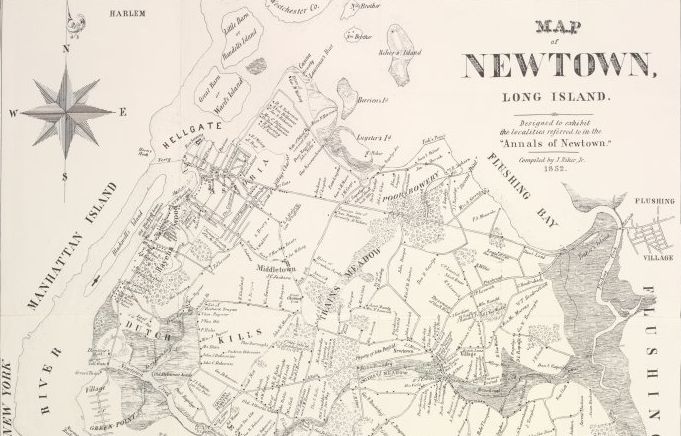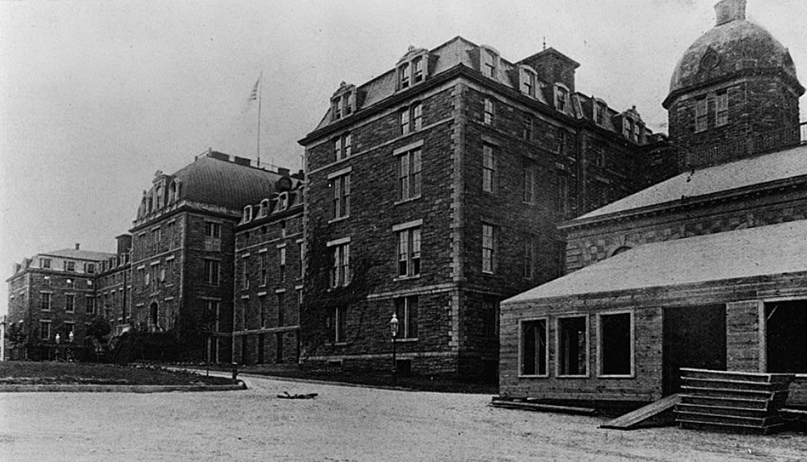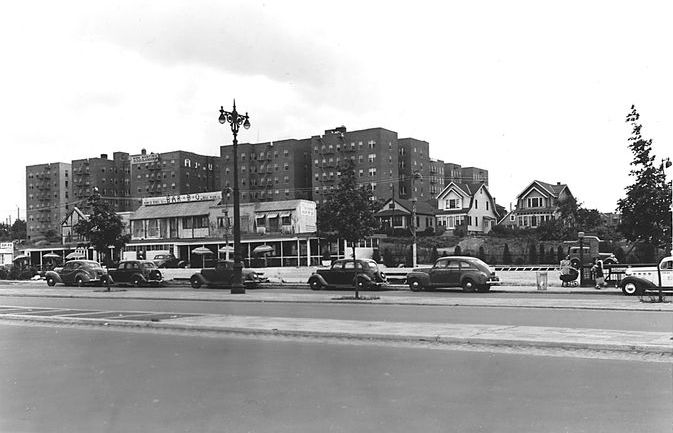
Long before it became the bustling neighborhood of “Elmhurst” in Queens, New York, the area was home to Native American tribes who lived on these sacred grounds for centuries. Known as Newtown during the early colonial period, this region’s history is deeply intertwined with the First Nation’s peoples who first inhabited it, their complex network of trails, and the transformation of their homeland after European settlement. The legacy of those trails still influences modern-day Queens, even as the memory of their creators fades into history.
The First Nation Peoples of Newtown
The area now known as Elmhurst was originally inhabited by the Matinecock, one of the many Algonquian-speaking tribes that populated Long Island. The Matinecock people were part of the broader Lenape (Delaware) group, whose territory extended from what is now Delaware through New Jersey, eastern Pennsylvania, and parts of New York. The Matinecock primarily occupied the northwestern portion of Long Island, including areas that became Newtown, Flushing, and Jamaica.
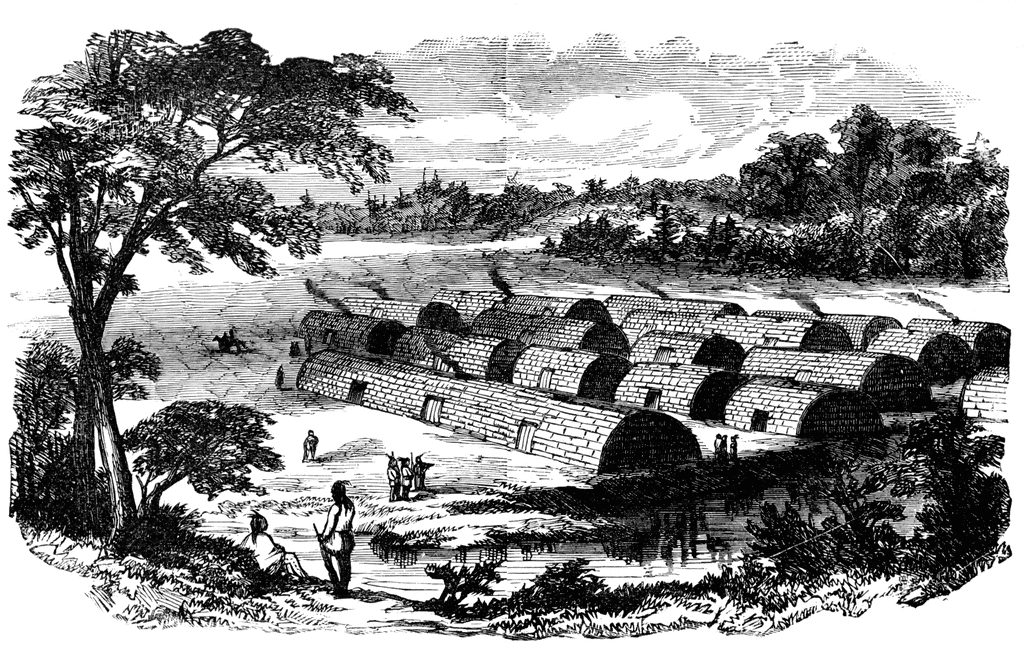
The Matinecock lived in semi-permanent villages and relied on a combination of agriculture, hunting, fishing, and foraging. They cultivated crops such as corn, beans, and squash—often referred to as the “Three Sisters”—and harvested fish and shellfish from nearby waterways like the Flushing River/Creek. The forests provided game, including deer and turkey, and the meadows and marshes were sources of berries, nuts, and medicinal plants.
Trails as Lifelines
The Matinecock developed an extensive network of trails that served as vital arteries for travel, trade, and communication. These trails connected villages, hunting grounds, and fishing areas, as well as linking their territory to those of neighboring tribes. Trails often followed natural features, such as ridges, streams, and coastlines, making them efficient routes for both foot traffic and the transportation of goods.
One of the most notable trails in the area was an east-west route that later became part of the colonial Newtown Road, now approximated by Queens Boulevard. This trail connected the Matinecock villages in present-day Queens to other Lenape settlements further east on Long Island and west into what is now Brooklyn and Manhattan. Another significant path ran north-south, linking Newtown to Flushing Bay and the East River, which were critical waterways for fishing and trade.
These trails were not just practical; they also held cultural and spiritual significance. They were pathways to sacred sites, such as burial grounds, and venues for ceremonies and gatherings. The trails exemplified the deep connection the Matinecock had with their environment and their understanding of the land’s natural contours.
The Arrival of Europeans
The first recorded European contact with the Matinecock occurred in the early 1600s, when Dutch explorers began charting the area. By 1624, the Dutch West India Company had established New Amsterdam in Lower Manhattan, laying claim to the lands of Manhattan Island and Long Island. The Dutch then made several deals with the local natives, including the Matinecock, in order to expand their colony.
The first permanent European settlement in the “Elmhurst” region was established in 1642 at the head of Maspeth Creek by Dutch colonists. This settlement, however, was short-lived. Tensions with the Matinecock and other local tribes, exacerbated by land disputes and cultural misunderstandings, led to violent conflicts. The Maspeth settlement was abandoned after only a few years.
In 1652, English settlers established a new village further inland at what is now the intersection of Queens Boulevard and Broadway. Originally named Middelburgh, the village was later referred to as Newtown to distinguish it from the failed Dutch settlement at Maspeth. The English chose the location strategically, as it was away from the coast and thus less vulnerable to attacks.
Transforming the Trails
As European settlement expanded, the native trails were gradually repurposed into colonial roads. Newtown Road, which followed one of the major Matinecock trails, became a key route connecting the village of Newtown to Jamaica and other parts of Long Island. The English widened and paved the trails, adapting them for horse-drawn carts and wagons. Over time, these roads became the foundation of Queens’ modern transportation network.
Queens Boulevard, one of the borough’s busiest thoroughfares today, traces its origins to the Matinecock’s east-west trail. Similarly, Flushing Avenue and other major roads in the area evolved from indigenous pathways. While the original trails have long since disappeared beneath layers of asphalt and concrete, their legacy endures in the layout of the neighborhood.
Conflict and Displacement
The arrival of Europeans and the subsequent expansion of settlements had notable effects on the Matinecock. As land was divvied up into homestead lots, traditional hunting and fishing grounds were restricted.
By the late 1600s, the Matinecock and other First Nation groups in the area had been largely displaced. Many migrated eastward to join other Lenape bands, while others assimilated into colonial society, mostly hired as guides and trackers. Some Matinecock families remained in the region, living on the fringes of settlements and maintaining their traditions as best they can.
Remembering the Matinecock and Their Trails
Today, few physical traces of the Matinecock remain in Elmhurst or the broader Newtown area. However, their legacy is preserved in historical records, place names, and the enduring influence of their trails on the borough’s infrastructure.
One such effort is the preservation of historical sites that were once significant to the Matinecock. For example, the Bowne House in Flushing, built in 1661, stands as a reminder of the early interactions between Native Americans and European settlers. While not directly linked to the Matinecock trails, it serves as a historical anchor for understanding the broader context of native life in Queens.
Conclusion
Understanding and preserving the First Nation’s history is crucial to appreciating the rich cultural tapestry of Elmhurst and the broader New York City area. By remembering the Matinecock and their contributions, we honor the original stewards of the land and recognize their enduring legacy in the ever-changing urban landscape.

Eric is a 4th-generation native New Yorker and a professional historian, author and educator.