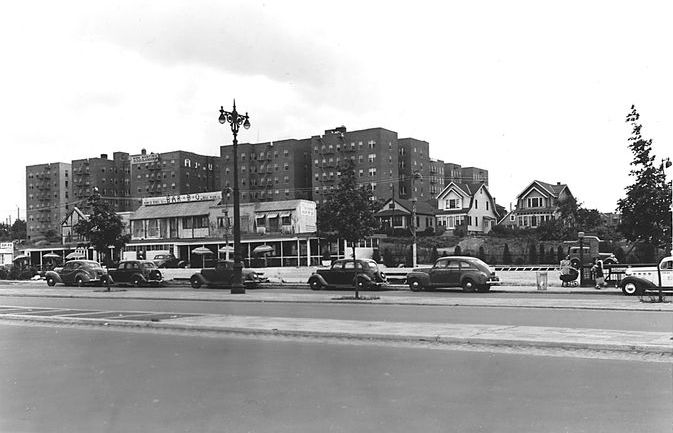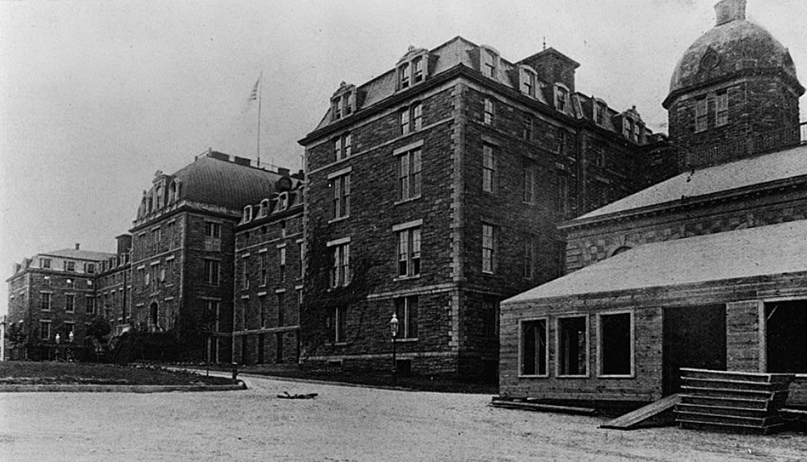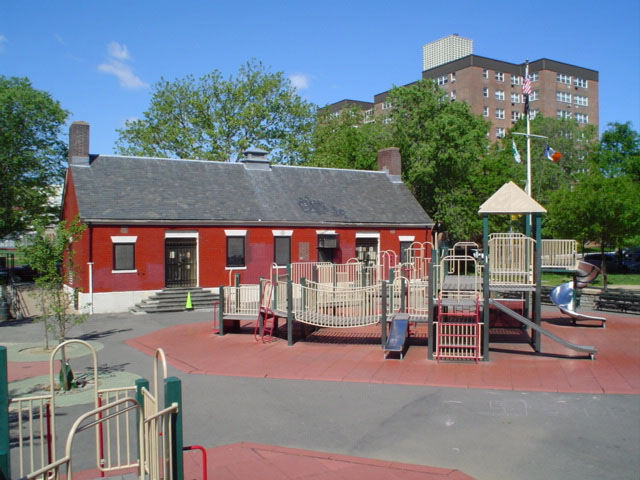
When my son was younger, this was our go-to park. He referred to all the parks in the neighborhood based on their appearance or how he felt about it. There was the “Red Park” (Elmhurst Park), the “New Park” (Moore Homestead), the “Bug Park” (Hoffman Park), and the “Stinky Park” (I’ll leave this one unnamed). Newtown Park was, sensibly, the “Mall Park,” and it was an is a wonderful oasis of a playground for the younger age group.
Newtown Playground: A Place Where History and Recreation Intertwine
Newtown Playground in Elmhurst, Queens, is more than just swings and slides; it’s a living testament to the area’s layered past. Beneath the cheerful sounds of children playing lies a history stretching back to the earliest days of European settlement in the region, a history of community, change, and the evolving use of public space.
From Rural Burial Ground to Potter’s Field
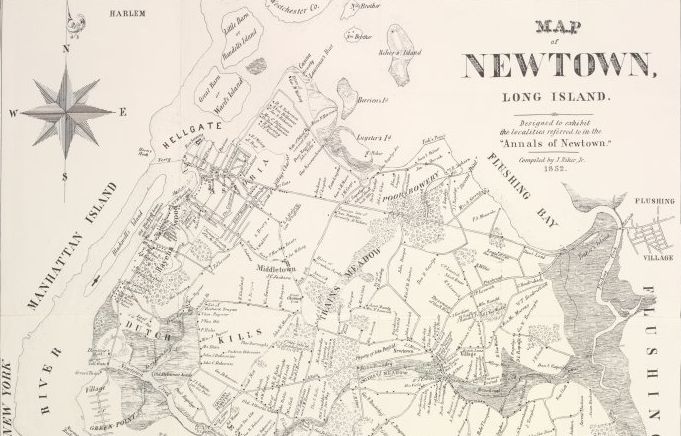
The land now occupied by Newtown Playground was once the Old Newtown Cemetery, also known as the Ancient Burial Ground. While the precise date of its establishment remains somewhat elusive, evidence suggests it was in use as early as 1730, making it the first established burial ground in the area. This was a time when Newtown, then a distinct rural village, was developing its own identity. The cemetery became the final resting place for many of the area’s early settlers, including prominent figures like Reverend John Moore, a key founder of Newtown. Imagine a landscape of rolling hills, dotted with simple headstones, marking the lives of farmers, tradespeople, and their families.
As the 19th century progressed, the rural character of Newtown began to shift. The cemetery, too, underwent a transformation. By the mid-1800s, it had become a potter’s field, a public burial ground for those who were indigent or unknown. This shift reflects the changing demographics and social conditions of the time. Both African Americans and European Americans were interred here, a poignant reminder of the diverse community that existed even then. Reports from 1897 describe the cemetery in a state of neglect and disrepair, a sign of the changing times and perhaps a reflection of societal attitudes toward pauper burials.
The Rise of Elmhurst and the Need for Public Space
The late 19th and early 20th centuries witnessed a surge in population in what would become Elmhurst. The once-rural landscape was rapidly urbanizing, with new housing developments and commercial activity transforming the area. This growth brought with it a pressing need for public amenities, including parks and playgrounds. In 1915, recognizing the need for recreational space in the burgeoning neighborhood, local civic groups began advocating for the conversion of the neglected cemetery into a playground.
A Controversial Transformation
In 1917, the New York City Parks Department officially took control of the property, setting the stage for its transformation. However, the actual conversion didn’t begin until the 1920s and accelerated in the 1930s. The process was not without controversy. In 1927 and 1928, the remaining headstones were removed and the land was graded, erasing much of the visible evidence of the site’s past. This act, while creating much-needed recreational space, also sparked concerns about respecting the memory of those buried there. A more extensive reconstruction project in 1935, undertaken during the Works Progress Administration (WPA) era, finalized the creation of the Newtown Playground we see today. The WPA, a New Deal program, provided employment during the Great Depression and contributed significantly to the development of public infrastructure across the country.
Remembering the Past in the Present
While the physical markers of the cemetery are largely gone, the history of the site has not been entirely forgotten. A plaque within the playground acknowledges its past as a burial ground, serving as a subtle reminder of the generations who came before. The Elmhurst History and Cemeteries Preservation Society continues to play a vital role in raising awareness of the site’s historical significance and advocating for greater recognition of its layered past. They strive to ensure that the memory of those interred there is not lost to time.
Newtown Playground Today: A Community Hub
Today, Newtown Playground stands as a vibrant community hub, a place where children laugh and play, where neighbors gather, and where the echoes of history mingle with the sounds of modern life. It offers a range of recreational facilities, including play equipment, basketball and handball courts, and a comfort station. Its transformation from a burial ground to a playground reflects the dynamic evolution of urban spaces and the ever-changing needs of communities. Newtown Playground is a place where the past and present converge, a reminder that even in the midst of bustling city life, history is always present, just beneath the surface.

Eric is a 4th-generation native New Yorker and a professional historian, author and educator.